Not all aluminum windows are built the same, even when they look identical side by side. Frame thickness, thermal break quality, glazing, and hardware all vary between suppliers. Those differences only show up years later — as a window that sticks, sweats, or lets in more heat than it should. This guide walks through exactly what to check before you order.
Start with the frame itself. A detailed breakdown of aluminum profile grades explains why alloy choice and wall thickness matter more than most buyers realize. A cheap frame can look fine on day one and still fail years later.
Rauf Glass & Aluminum Centre fabricates aluminum windows to order for homes across Lahore. Every point below reflects what actually gets checked on a real installation, not just spec-sheet theory.
1. Check the Frame Profile and Wall Thickness
Look for aluminum profiles made from 6063 or 6061 alloy. These grades balance strength with resistance to corrosion, which matters in Lahore’s humidity and dust.
Wall thickness matters just as much as the alloy. A standard 60mm profile should run at least 1.4mm thick. Larger 65mm, 70mm, or 80mm profiles need at least 1.8mm to stay rigid under wind load and daily use. Anything thinner flexes over time and eventually distorts the frame.
2. Decide Between Thermal Break and Standard Aluminum
A thermal break window separates the interior and exterior aluminum with an insulating barrier, usually a polyamide strip. Standard aluminum uses one continuous piece of metal instead, which conducts outside heat straight into the room.
For Lahore’s summers, that difference shows up directly in your electricity bill. A thermal break frame keeps outdoor heat from transferring into an air-conditioned room. That reduces the load on your AC system during the hottest months. Standard aluminum still works fine for covered balconies, sheds, or spaces that aren’t air-conditioned.
If a supplier claims their window is thermally broken, ask to see a cross-section. You should see a distinct barrier strip, usually grey or brown, physically separating the inner and outer aluminum. If they can’t show you that, the window probably isn’t thermally broken.
3. Get the Glazing Right
The glass matters as much as the frame. For Lahore’s climate, ask specifically about:
- Low-E coated glass — reflects solar heat while still letting in visible light, which cuts down on how much heat builds up indoors
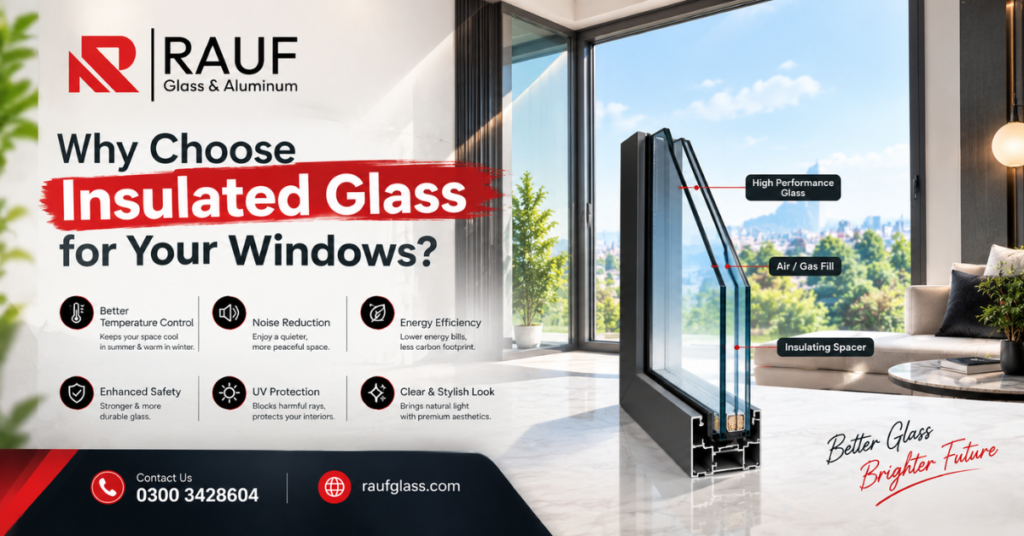
- Double glazing — two panes with a sealed air gap between them, for both insulation and noise reduction
- Tempered glass — required for any window near floor level, a door, or a high-traffic area, since it breaks into blunt granules instead of sharp shards
Don’t accept plain clear glass without asking what coating and thickness it uses. A vague answer here usually means the supplier hasn’t specified it at all.
4. Check the Opening Style
Different opening styles seal differently. That affects both insulation and how much rain or dust gets in during bad weather.
| Opening Style | Sealing Performance | Best For |
| Casement | Highest — compresses against the frame on all sides | Bedrooms, living rooms |
| Tilt-turn | High, with dual functions for ventilation and cleaning | Bathrooms, upper floors |
| Sliding | Lower — relies on brush seals, not full compression | Balconies, wide openings |
| Fixed | Highest for insulation, but no ventilation | Large feature windows |
None of these is universally “best.” The right choice depends on the room, the view, and how much ventilation you actually need there.
5. Confirm the Finish and Corrosion Protection
Aluminum frames get their color through powder coating or anodizing. The industry benchmark for powder coating quality is the Qualicoat standard. It sets requirements for coating thickness, adhesion, and resistance to fading and corrosion.
Ask what warranty the finish carries. A properly coated frame should hold its color and resist corrosion for well over a decade. It needs nothing more than occasional cleaning — no repainting, no touch-ups.
6. Check the Hardware
Hinges, handles, and locking mechanisms wear out long before the frame does if they’re low quality. Multi-point locking hardware engages at several points along the sash, not just one. It holds a window tighter and resists forced entry better than a single-point latch.
Ask what hardware brand is included in your quote. “Standard hardware” with no brand named is worth pushing back on.
7. Get Accurate Site Measurements
Aluminum windows are made to order, not bought off a shelf. A supplier who quotes a price without visiting your site first is just guessing at dimensions. That guess shows up later as gaps, drafts, or a frame that doesn’t sit flush. Always insist on an in-person site visit before you accept a final quote.
Questions to Ask Before You Buy
- What alloy grade and wall thickness does the frame use?
- Is it thermally broken, and can you show me the cross-section?
- What glass package comes standard — Low-E, double glazed, tempered?
- What hardware brand is included, and is it multi-point locking?
- What finish warranty applies to the color and coating?
- Will someone visit my site to measure before quoting a final price?
A supplier who answers all six clearly and specifically is worth trusting. One who just quotes a price per square foot is not.
Why Choose Rauf Glass & Aluminum Centre
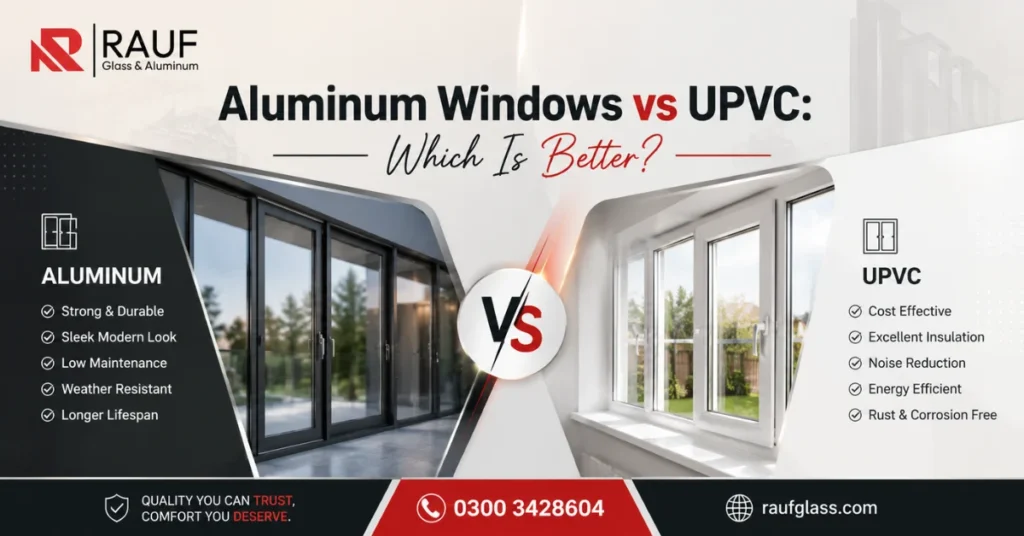
Rauf Glass & Aluminum Centre fabricates and installs custom aluminum windows for homes and offices across Lahore. The team visits your site before quoting, confirms frame profile and glazing based on the room, and fits hardware rated for the window size. Still weighing aluminum against other frame materials? The aluminum windows vs UPVC comparison covers that decision in more depth.
You can browse the full range of window and aluminum work on the services page. Reach the team through the contact page to arrange a site visit and quote.
Final Thoughts
The right aluminum window comes down to details most buyers never think to ask about. Alloy grade, wall thickness, thermal break quality, glazing, hardware, and finish all matter. Any supplier can quote a price for “aluminum windows.” Only a few can tell you exactly what’s inside the frame you’re paying for.
Ask the six questions above before you sign anything. Get a site visit before you accept a final number. Planning new windows in Lahore? Contact Rauf Glass & Aluminum Centre for a quote based on your actual openings.
📞 Call Us Today: 0300 3428604
FAQs
What is the minimum frame thickness for a quality aluminum window?
A standard 60mm profile should be at least 1.4mm thick. Larger 65mm to 80mm profiles need at least 1.8mm to stay rigid over time.
Do I need thermal break aluminum windows in Lahore?
For air-conditioned rooms, yes. A thermal break frame cuts how much outdoor heat transfers indoors, which lowers your cooling load in summer. Non-thermal aluminum still works for unconditioned spaces like covered balconies.
Which opening style seals best against heat and dust?
Casement windows seal best, since the sash compresses against the frame on all sides. Sliding windows rely on brush seals and generally perform lower in sealing tests.
How do I know if an aluminum window’s powder coating is good quality?
Ask if the coating meets the Qualicoat standard, and ask what warranty covers fading and corrosion. A quality finish should last well over a decade with only routine cleaning.