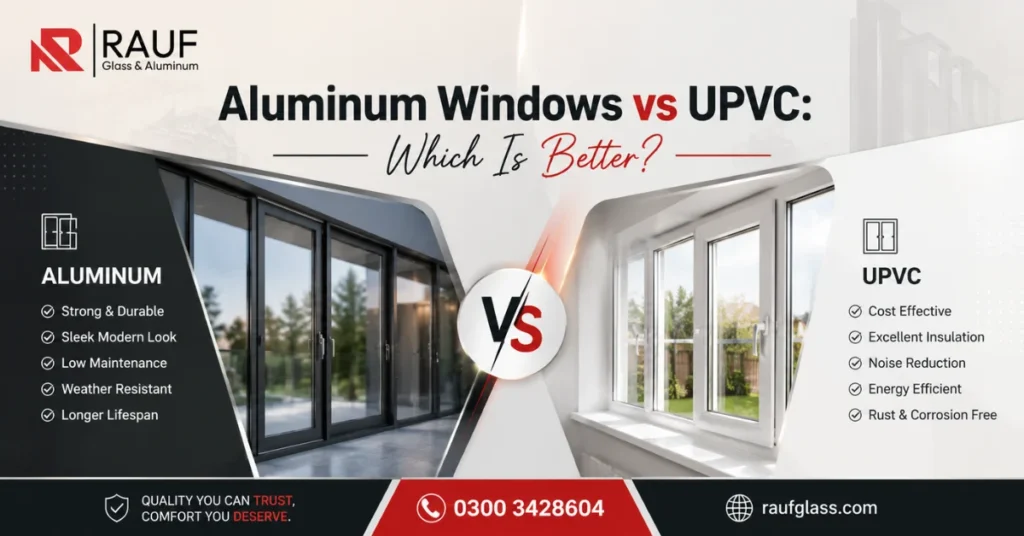
Choosing a window frame material feels like a small decision until you live with it for ten years. Aluminum and UPVC are the two most common choices for modern homes and offices today, and both have a legitimate case. This guide compares them across the factors that actually matter — strength, insulation, upkeep, appearance, and cost — so you can pick the one that fits your building and your climate, not just a showroom sample.
What Makes Aluminum and UPVC Different
Aluminum is a metal, so it’s naturally strong and rigid. Modern aluminum frames use a thermal break — an insulating strip inside the frame — to stop it from conducting outside heat straight into the room, a problem older, non-broken aluminum frames genuinely had.
UPVC (unplasticized PVC) is a rigid plastic, often reinforced internally with steel or aluminum for extra stiffness. Its multi-chambered profile traps air inside the frame, which is what gives it strong natural insulation without needing a thermal break at all.
Strength and Structural Performance
Aluminum wins on raw strength. Its tensile strength runs three to six times higher than UPVC’s, which is why aluminum frames can support larger single panes and wider spans — think floor-to-ceiling glazing or a wide shopfront window — without extra reinforcement.
UPVC holds up fine at standard window sizes but needs internal steel reinforcement as sizes grow, adding cost and bulk to the frame. For Rauf Glass & Aluminum Centre’s window installations, this is usually the deciding factor for larger commercial openings.
Thermal Insulation
This one is closer than people expect. High-quality UPVC naturally insulates well thanks to its low conductivity, while thermally broken aluminum now reaches comparable U-values — often in the 1.2–1.4 W/m²K range with double glazing, close to UPVC’s own numbers.
In practice, the glazing you choose matters more than the frame material alone. Vitrums notes that with quality double or triple glazing, the real-world thermal gap between a well-built aluminum and UPVC window is small.
Performance in Hot Climates
Lahore’s summers push both materials to their limits, just in different ways. Standard UPVC can expand noticeably once temperatures pass roughly 25–30°C, which can make sashes feel stiff or misaligned during the hottest months, especially in darker frame colours that absorb more heat.
Aluminum doesn’t expand the same way and holds its shape across a wider temperature range, which is part of why it remains the standard choice for hot-climate commercial glazing across Pakistan. UPVC can still perform well in heat if it’s UV-stabilised, certified profile — but that quality varies a lot between suppliers.
Maintenance and Lifespan
Both materials are genuinely low-maintenance compared to wood, but they age differently. Aluminum frames typically last 30 to 40-plus years and don’t fade, warp, or need repainting — an occasional wipe-down is usually all they need.
UPVC frames run a shorter practical lifespan, generally 15 to 30 years, and lower-grade profiles can discolour or become brittle under prolonged sun exposure over that time.
Appearance and Design Flexibility
Aluminum frames are noticeably slimmer — typically 50–65mm compared to UPVC’s 70–80mm — which means more visible glass and a cleaner, more contemporary look for the same opening. That slimness is why architects lean on aluminum for large glazed facades and modern shopfronts.
UPVC comes in a narrower range of finishes, usually white, grey, or a small set of woodgrain foils. Rauf Glass & Aluminum Centre works almost exclusively in aluminum for this reason — it gives clients far more colour and profile choice for a custom look.
Security
Both materials, correctly installed with quality hardware, resist forced entry reasonably well. Aluminum’s rigidity gives it a slight edge on larger panels, since its higher structural strength means less flex under pressure at the same frame thickness.
UPVC’s internal steel reinforcement closes much of that gap at standard window sizes, so for most homes, security comes down more to the lock and glass specification than the frame material itself.
Environmental Considerations
Aluminum is fully and repeatedly recyclable without any loss in quality, which is a genuine long-term advantage over plastic-based frames. UPVC, by contrast, is difficult to recycle effectively, since the material degrades each time it’s reprocessed.
For a building expected to stand for decades, that recyclability difference adds up, especially on large commercial projects where frame volume is significant.
Cost Considerations
UPVC is generally the cheaper option upfront, since its raw material and manufacturing costs run lower than aluminum’s. Aluminum, particularly with a thermal break, typically costs more at installation — but that gap narrows over time given its longer service life.
The right way to compare cost isn’t the sticker price alone. Factor in expected lifespan, maintenance, and how soon a lower-cost option might need replacing, then get a site-specific quotation rather than relying on rough averages from another market.
Which One Should You Choose?
If your priority is the lowest upfront cost for a standard-sized home window, UPVC is a reasonable, well-tested option — as long as you confirm it’s a certified, UV-stabilised profile suited to Lahore’s climate.
If you want larger glazed openings, a slimmer modern look, or a frame built to handle decades of Lahore summers without warping, aluminum is the stronger long-term choice — which is why it’s the material Rauf Glass & Aluminum Centre specialises in for windows, doors, and shopfronts across the city.
Why Choose Rauf Glass & Aluminum Centre
Rauf Glass & Aluminum Centre designs and installs custom aluminum windows, doors, and shopfronts for homes and businesses in Lahore, alongside its glass partition, shower cabin, and railing work. The team visits your site, confirms measurements in person, and quotes based on the actual opening — not a generic size chart.
You can browse the full range of aluminum and glass work on the services page, or get in touch through the contact page to arrange a site visit and quotation.
Final Thoughts
Neither material is universally “better” — the right one depends on the size of your openings, your budget, and how much you value a slim, modern frame versus the lowest upfront cost. For Lahore’s climate specifically, aluminum’s resistance to heat expansion and its long service life make it the material most commercial and high-end residential projects settle on.
If you’re planning new windows or a shopfront and want a frame built for the local climate, contact Rauf Glass & Aluminum Centre for a site visit and a quote based on your actual space.
📞 Call Us Today: 0300 3428604
FAQs
Which lasts longer, aluminum or UPVC windows?
Aluminum generally lasts longer — 30 to 40-plus years compared to UPVC’s typical 15 to 30 years, mainly because aluminum doesn’t fade, warp, or become brittle under prolonged sun exposure.
Is aluminum or UPVC better for hot climates like Lahore?
Aluminum tends to perform more consistently in extreme heat, since standard UPVC can expand and feel stiff once temperatures climb past roughly 25–30°C. UPVC can still work well if it’s a certified, UV-stabilised profile.
Which is cheaper, aluminum or UPVC windows?
UPVC is usually cheaper upfront. Aluminum costs more at installation but tends to close that gap over time thanks to its longer lifespan — Rauf Glass & Aluminum Centre can quote both based on your exact requirements.
Can aluminum windows match UPVC’s insulation?
Yes, largely. Thermally broken aluminum frames now reach U-values close to UPVC’s, so the glazing specification matters more than the frame material for most projects today.